Becoming Your Client’s Go-To Resource
How understanding aging and family dynamics can make you more valuable to current clients and more relevant to the next generation
A financial or estate plan may be excellent on paper.
But what happens when a parent refuses help, siblings disagree, the person named in the documents is unprepared, or a crisis forces the family to make decisions no one has discussed?
The plan itself may not be the problem. The assumptions behind it may never have been tested.
Becoming Your Client’s Go-To Resource helps financial planners, estate planning attorneys, CPAs, trust professionals and others better understand the realities of aging that can affect their clients, their families and the plans they have created.
You do not need to become an expert in aging. You can become more valuable by asking better questions, recognizing where a plan may be vulnerable and knowing where families can turn when circumstances begin to change.
Why This Matters to Your Practice
Research suggests that most heirs do not continue working with their parents’ financial advisor after an inheritance. Often, the adult children had little or no meaningful relationship with that professional before the parent’s death.
Aging creates an opportunity to build that relationship earlier.
When you help clients think beyond accounts, projections and legal documents, you demonstrate that you understand the family behind the plan. You also give spouses and adult children a reason to see you as a trusted resource before a crisis or inheritance brings them into the conversation.
What’s in It for You?
Become more valuable to existing clients by understanding the aging issues that extend beyond financial, legal or estate planning.
Uncover untested assumptions, ask better questions and help protect the plan already in place.
Better understand the family dynamics that can complicate even the best-designed plan.
Build relationships with adult children before a crisis or inheritance, increasing the likelihood that the relationship continues across generations.
Strengthen client loyalty, generate referrals and differentiate yourself as a professional who understands both the plan and the family behind it.
30-Minute Briefing
When a Good Plan Meets Real Family Life
This focused briefing introduces the aging and family issues that can undermine an otherwise well-designed financial or estate plan.
Using a realistic family example, we explore what can happen when:
Parents plan to remain at home but have not considered what that will require.
The person named in the documents lives out of state or is unprepared for the role.
A family has adequate resources, but the parents resist spending money on help.
One spouse has quietly been compensating for changes in the other.
Adult children disagree about whether there is a problem or what should happen next.
The plan may be excellent. The family may simply be unprepared to carry it out.
Participants leave with five practical questions they can begin incorporating into client conversations to uncover assumptions about housing, future support, family involvement, decision-making and communication between regular meetings.
Format: Approximately 25 minutes of presentation and 5 minutes for discussion
60-Minute Interactive Presentation
Becoming Your Client’s Go-To Resource
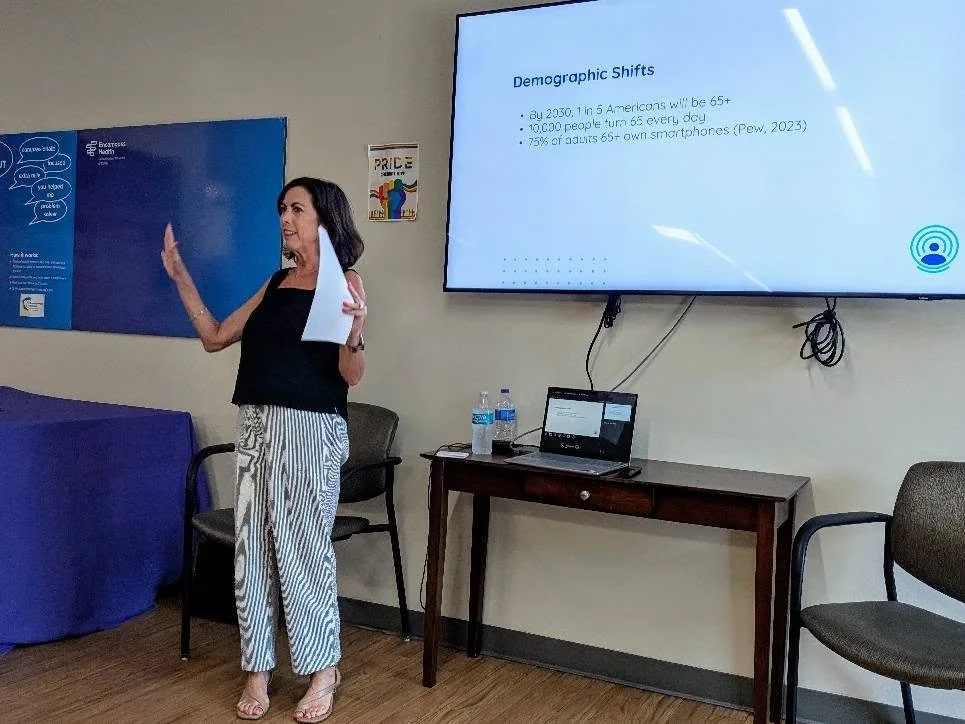
This interactive presentation takes a deeper look at the human factors that can affect the implementation of a financial or estate plan.
Participants will explore:
Why Families Wait
Why even well-educated, financially secure clients may minimize changes, postpone decisions and have difficulty imagining themselves needing help.
The Assumptions Behind the Plan
What may be missing when clients say:
“We plan to age in place.”
“Our daughter will handle everything.”
“We have enough money for whatever we need.”
“The children know what we want.”
“All our documents are complete.”
The Family Dynamics That Can Disrupt Planning
How sibling roles, distance, unequal involvement, denial and disagreement can affect decisions and the family’s ability to move forward.
The Difference Between Authority and Readiness
Why naming someone as power of attorney, executor or trustee does not necessarily mean that person has the information, time, ability or family support to fulfill the role.
Better Questions to Ask
Practical questions that help professionals test assumptions about housing, support, family involvement and future decisions while remaining within their own area of expertise.
Building Relationships Across Generations
Ways to involve spouses and adult children appropriately, establish communication before a crisis and become useful to the next generation before an inheritance occurs.
Knowing Where Families Can Turn
An introduction to the practical aging landscape, including support at home, senior living, home modifications, technology and other resources.
Participants leave with a stronger understanding of the family issues that can affect their work, practical questions to incorporate into client conversations and concrete ways to provide greater value across generations.
Format: Approximately 50 minutes of presentation and 10 minutes for discussion
Who This Program Is For
Programs can be presented for:
Financial planning and wealth management firms
Estate planning and elder law practices
CPA and accounting firms
Trust departments and fiduciary professionals
Professional associations and networking groups
Client and family education events
Programs can be offered in person in the Dallas area or virtually for organizations anywhere.
About Laurie Miller
Laurie Miller is the founder of Age Tech Now and co-owner of Apple Care & Companion, a family-owned Dallas home care agency serving older adults and their families since 2006.
With a master’s degree in Aging Studies and 20 years of experience helping families navigate the practical realities of aging, Laurie understands what can happen when a thoughtful plan meets family dynamics, changing needs and real-life decisions.
Her approach is practical, conversational and focused on helping families and the professionals who serve them become prepared, not panicked.
Help Good Planning Work in Real Life
You do not need to have every answer about aging.
By asking better questions, testing the assumptions behind the plan and knowing where families can turn next, you can become more valuable to your current clients and more relevant to the next generation.